29/05/2026
QA Quality Control Jobs in Construction UK: A Complete Career and Hiring Guide
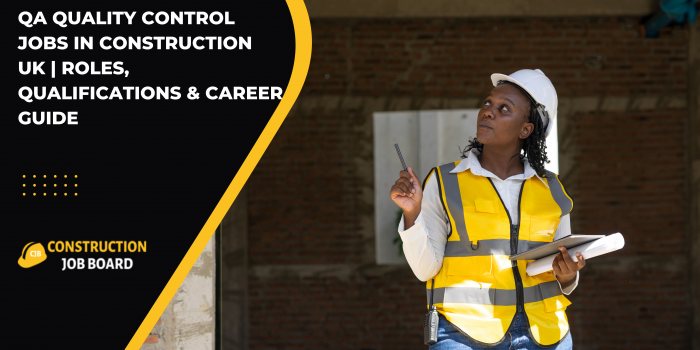
Among the most strategically important roles across any construction project, QA quality control jobs in construction UK are responsible for ensuring that built assets meet technical specifications, regulatory standards, and client expectations. As building safety legislation continues to evolve following major regulatory reforms in the UK, demand for skilled quality professionals has intensified significantly — making construction QA roles among the most sought-after career paths in the sector.
This guide covers everything employers and candidates need to know about QA quality control jobs in construction UK, from the day-to-day responsibilities of quality inspectors and QA managers to the qualifications that open doors and the salary ranges candidates can expect at different career levels.
What QA Quality Control Professionals Do in Construction
Construction quality control jobs span a broad range of responsibilities, from proactive quality planning at project inception through to reactive inspection during and after construction activities.
At the planning stage, quality professionals develop Inspection and Test Plans (ITPs), Method Statements, and project-specific Quality Management Plans (QMPs) that define how quality standards will be achieved and documented throughout the project lifecycle.
During construction, quality control inspectors and engineers conduct hold point inspections, witness structural and material tests, review contractor submissions, and audit site operations against the approved quality framework. They maintain records of non-conformances, corrective actions, and close-out evidence — documentation that is essential for client acceptance and compliance with the Building Safety Act on higher-risk buildings.
At senior levels, QA managers and quality directors lead the quality function across multiple projects or across an entire contracting business, interfacing with clients, supply chains, and third-party certification bodies including ISO 9001 auditors.
Building Safety Act Impact on Construction QA Jobs
The Building Safety Act has elevated the profile of quality roles in UK construction significantly. The legislation introduced new mandatory requirements for documentation, gateway approvals, and the maintenance of a 'golden thread' of building information throughout the design, construction, and occupation phases.
These requirements fall squarely within the quality management remit. Consequently, demand for experienced QA professionals has grown substantially, particularly for higher-risk buildings such as residential blocks above 18 metres and complex commercial structures.
Employers who previously treated quality as a secondary function are now investing in dedicated quality teams to ensure compliance with the new legislative framework. This has created significant career opportunities for construction quality professionals at all levels.
Essential Qualifications for Construction Quality Roles
Employers recruiting for QA quality control jobs in construction UK look for a combination of formal qualifications and practical site experience.
Educational foundation: An HNC, HND, or degree in civil engineering, structural engineering, construction management, or a related discipline provides the technical grounding essential for understanding construction processes and defect identification.
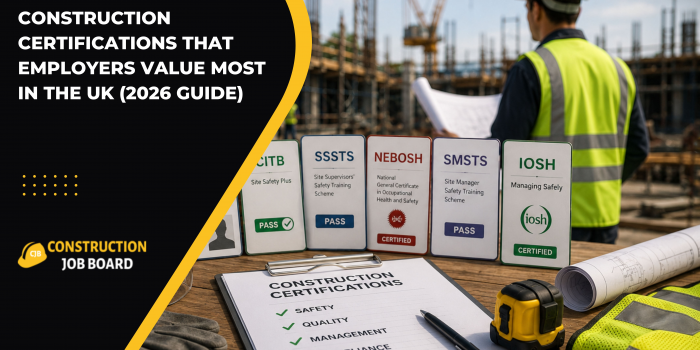
ISO 9001 Lead Auditor certification: Increasingly expected for quality manager and senior roles, this demonstrates the ability to implement, manage, and audit quality management systems to international standards. Many contracting organisations hold ISO 9001 accreditation as a prerequisite for major contract frameworks.
Professional membership: Membership of the Chartered Quality Institute (CQI) or the Chartered Institute of Building (CIOB) adds professional credibility and signals a commitment to continuous development in quality management.
Specialist qualifications: For roles focused on reinforced concrete, structural steel, or geotechnical works, specialist credentials from the Concrete Society or British Standards Institution (BSI) are highly regarded by employers.
Salary Ranges for Construction QA Roles
QA quality control jobs in construction UK offer competitive salaries that reflect the seniority and complexity of each role.
Junior quality inspectors and quality administrators typically earn between £28,000 and £38,000 per year. Mid-level quality engineers and site quality managers command £40,000 to £55,000, often supplemented by a car allowance and enhanced pension contributions.
Senior quality managers and quality directors on major infrastructure or complex building programmes can earn £60,000 to £85,000 plus benefits packages. Quality roles on nuclear, rail, and offshore wind projects — where regulatory requirements are particularly stringent — typically command premium salaries due to the specialist expertise required.
London and major city projects generally attract salary uplifts of 15 to 20 percent above regional equivalents, reflecting higher living costs and the concentration of premium contracts in urban areas.
Career Progression in Construction Quality Assurance
Quality careers in construction follow a relatively clear progression path. Graduates and technicians typically enter as quality administrators or junior quality inspectors, progressing through quality engineer, quality manager, and senior quality manager levels over a decade or more of experience.
The transition into quality director or head of quality roles requires extensive experience across multiple project types, strong stakeholder management skills, and typically a chartered professional qualification. Continuous professional development is essential — keeping current with evolving British Standards, Building Safety Act requirements, and ISO 9001 updates ensures quality professionals remain competitive.
For professionals exploring adjacent career paths, roles such as health and safety jobs in UK construction share significant overlap with quality management, particularly around compliance, documentation, and site inspection responsibilities.
How to Find QA Quality Control Jobs in Construction
The most effective route to finding QA quality control jobs in construction UK is through specialist construction recruitment platforms that understand the sector's specific qualification requirements and career structures.
General job websites often lack the construction-specific filtering needed to identify quality roles by project type, required certifications, or contract value. Specialist platforms, particularly the best construction job boards UK, allow candidates to target roles that match their specific experience and qualifications accurately.
When building a profile on construction job boards, quality professionals should prominently feature their ISO 9001 status, ITPs they have developed, the project types they have inspected, and any experience with the Building Safety Act gateway process. These details are the primary screening criteria used by employers recruiting for quality roles.
Employer Demand for Construction QA Professionals
Principal contractors, tier-one construction businesses, specialist subcontractors, and independent consultancies all recruit for quality roles. The highest concentrations of quality vacancies are typically found in sectors with the most demanding regulatory environments.
Infrastructure sectors including rail, nuclear, highways, and offshore energy generation consistently offer the strongest quality roles and highest salaries. Complex mixed-use developments and large-scale residential programmes also generate significant demand for construction QA professionals.
Employers in sectors where precision and compliance are critical — such as those who also recruit for estimator jobs in the UK — increasingly seek quality professionals who can integrate quality management with commercial and cost control functions.
Conclusion
QA quality control jobs in construction UK represent one of the sector's most professionally rewarding career paths. The combination of regulatory change, increased awareness of building safety, and growth in infrastructure investment has created strong and sustained demand for skilled quality professionals. Whether entering the field as a junior inspector or progressing to quality director level, the construction QA career path offers both strong salaries and long-term job security.
Frequently Asked Questions
Q: What is the difference between QA and QC in construction?
Quality assurance (QA) refers to the proactive processes put in place to prevent defects — it is system and process focused. Quality control (QC) refers to the inspection and testing activities that identify defects during or after construction — it is product and output focused. Most construction quality roles combine elements of both disciplines in practice.
Q: Is ISO 9001 certification required for construction QA jobs?
ISO 9001 Lead Auditor certification is not always mandatory at entry level but is increasingly expected for quality manager and above roles, particularly within contractors who hold ISO 9001 accreditation as a business requirement. Achieving this qualification significantly enhances career prospects at senior levels.
Q: How has the Building Safety Act changed QA quality control jobs in construction?
The Building Safety Act significantly elevated the importance of quality roles by introducing mandatory documentation requirements, gateway approvals, and golden thread obligations for higher-risk buildings. This has driven increased investment in dedicated quality teams and created substantial new opportunities for experienced QA professionals.